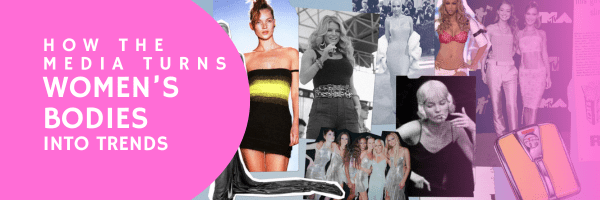
In an age where the media constantly bombards us with the “ideal” body type, it’s disheartening to recognise how women’s bodies have been transformed into ever-shifting trends. What’s worse, the promotion of these idealised body shapes – which seem to change every few years – has a lasting, devastating impact on how we, as women, view our self-worth and identity.
Over the last century, women’s body shapes have been categorized and idealized based on what the media decides is “in style.” For instance, the 1920s celebrated the slim, flat-chested “flapper” look, but by the 1950s, a “voluptuous hourglass figure” depicted by Marilyn Monroe, were in vogue. The ‘90s and early 2000s brought the era of “heroin chic” – characterized by emaciated frames and ‘malnourished’ silhouettes – while the 2010s embraced the Kardashian-inspired “slim-thick” body. Now, some media outlets are pointing to the resurgence of the “thin” aesthetic, once again undermining body diversity.
These shifting ideals do more than just highlight changing fashions; they teach women that their natural bodies are somehow inadequate if they don’t conform to the moment’s preferred shape. Unlike clothing, though, bodies can’t – and shouldn’t – be transformed to fit in with a seasonal trend. This message can encourage a toxic cycle of shame, self-criticism, and even harmful behaviours like extreme dieting and cosmetic surgeries.
The psychological toll of these expectations is severe. Exposure to media that idealizes certain body types is facilitates issues such as body dissatisfaction, body dysmorphia, anxiety, and depression for women. Particularly, young girls are vulnerable; they’re at an impressionable stage where they’re figuring out their own identities. When they’re exposed to narrow ideals of beauty, they face pressures to change their bodies before they’ve even finished growing.
These standards also reinforce damaging societal narratives around female worth and identity. When a woman’s body is treated like a trend, it reduces her to a physical form that can be “in” or “out” of style, as if her value is based solely on how she measures up to an arbitrary standard. Rather than embracing and celebrating diversity, this approach suggests that women’s worth is conditional – as if achieving a certain look grants social approval, while deviation from the ‘ideal’ body invites criticism.
While we’re seeing more body-positive movements and a rise in body inclusivity in some media spaces, the cultural impacts of these trends remain deeply ingrained. What’s needed now is a shift toward body neutrality and authenticity – a space where women aren’t pressured to sculpt their bodies based on transient ideals but are encouraged to appreciate them for what they truly are.
Media platforms, brands, and influencers play crucial roles in shaping public perception. By promoting diverse and realistic representations, they can help dismantle the cycle of body trends. Women’s bodies are not trends, and it’s time for media to reflect that truth. Real change will come when women’s bodies are no longer treated like fashion items but are valued for their strength, resilience, and individuality.

 Misogyny & Mainstream Media
Leave a comment