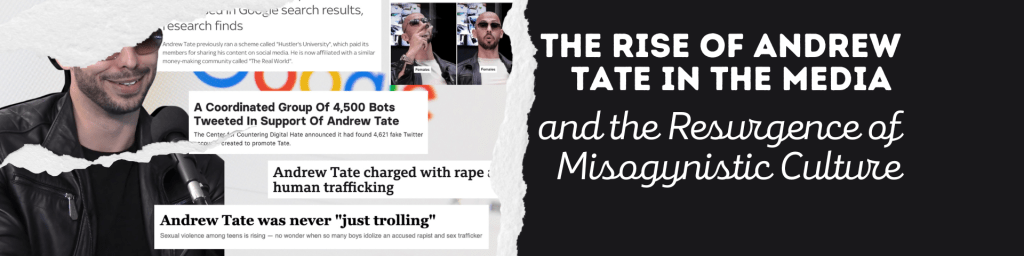
In recent years, social media has amplified a concerning trend: the growing popularity of figures who promote misogynistic views, such as Andrew Tate. Known for his controversial takes on masculinity, relationships, and women, Tate’s rhetoric has gained a massive following, particularly among young men. Tate and those who echo his ideology champion an ultra-masculine worldview where success is defined by dominance, wealth, and the ability to control or diminish others. While this mindset may appear new or shocking, it is in reality, a resurgence of long-standing, harmful gender stereotypes rebranded for a digital age. The rise of Tate’s influence is a symptom of deeper societal issues that contribute to the normalization of misogynistic culture in today’s generation.
Tate’s appeal largely stems from his straightforward, no-filter approach, which can be both engaging and provocative. He presents himself as the epitome of success, embodying what he claims are “high value” traits: wealth, power, and a relentless pursuit of personal freedom. Tate’s content speaks to young men searching for direction, purpose, or identity, and he offers them a version of masculinity that seems powerful and self-assured. Many young men, especially those struggling with confidence or self-worth, find empowerment in his assertive persona.
Yet, Tate’s brand of “empowerment” is grounded in toxic masculinity. His messages often portray relationships as a power struggle, with men positioned as dominant and women as submissive and inferior. This approach suggests that self-worth is tied to control and that a woman’s value depends on her compliance and adherence to traditional gender roles. Tate’s influence is troubling not only for women but for men, who are encouraged to adopt a distorted view of relationships and gender dynamics.
Social media platforms have played a significant role in amplifying Tate’s ideology and fostering similar voices. Algorithms are designed to prioritize content that evokes strong emotional reactions, and Tate’s posts, videos, and interviews do just that. His inflammatory language and divisive topics make his content highly engaging, even to those who don’t agree with him. As a result, social media pushes Tate’s videos into millions of feeds, making his ideology visible to an increasingly broad audience.
This phenomenon has normalized sexist and degrading ideas about women, desensitizing viewers to harmful stereotypes and misogynistic language. Young men may encounter these ideas repeatedly online, subtly internalizing them as acceptable or even desirable ways to think about and treat women. Such normalization of misogynistic values is particularly damaging, as it lowers the bar for respect and empathy in relationships, promoting distrust and animosity rather than understanding and equality.
The popularity of figures like Andrew Tate contributes to a societal environment where misogynistic beliefs are not only accepted, but also championed. Young men are increasingly encouraged to view relationships as transactional and adversarial, rather than mutual and supportive. For women, this means facing an increase in sexist attitudes and hostile environments in both personal and professional spaces. This culture negatively impacts everyone by promoting unrealistic standards, fostering aggression over communication, and preventing genuine connections between genders.
To combat the harmful effects of Tate’s influence, it’s essential to provide young people with healthier examples of masculinity, self-worth, and relationships. Educators, parents, and influencers alike can play a role by fostering discussions around equality, empathy, and mutual respect. Building a generation that values collaboration over dominance requires intentionality in how we discuss gender, masculinity, and respect. Empowering young men to find fulfillment without resorting to control or diminishing others is a crucial step toward creating a society that champions gender equality and genuine connection.

 Misogyny & Mainstream Media
Leave a comment